


EMBOSSING: GIVE YOUR COVERS RELIEF
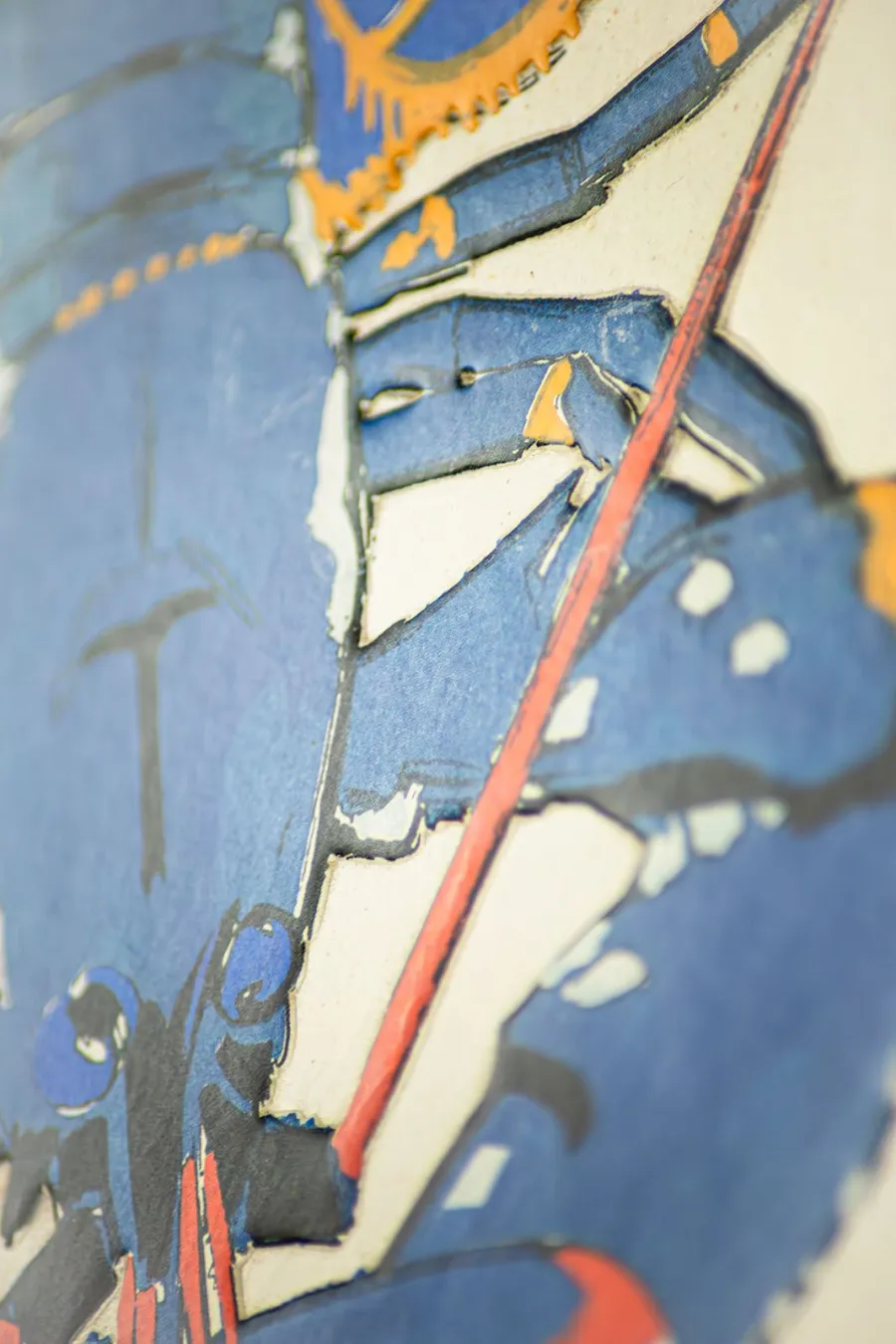
Embossing raises a title, a logo, an illustration or any other element of your cover in relief: the cover gains volume, catches the light and invites you to touch it.
Relief, obtained with two dies
A male die and a female counter-die clamp the paper: the material deforms and takes on the engraved relief.
Depending on the depth and the angles chosen, the result ranges from a delicate dome to a multi-level sculpted relief.
Feasibility depends on the paper, the board and the fineness of the design.
Note that with embossing, the imprint of the design is visible on the reverse of the material.
On its own or combined with foil
Blind embossing, without colour, plays on light alone: a restrained, premium finish, very effective on fine art papers and cloths in particular.
Combined with hot foil stamping — known as foil embossing —, it brings together the relief and the look, and possibly the shine, of the foil: the elements then stand out sharply, which works very well on art books, limited editions and any title meant to feel upmarket.
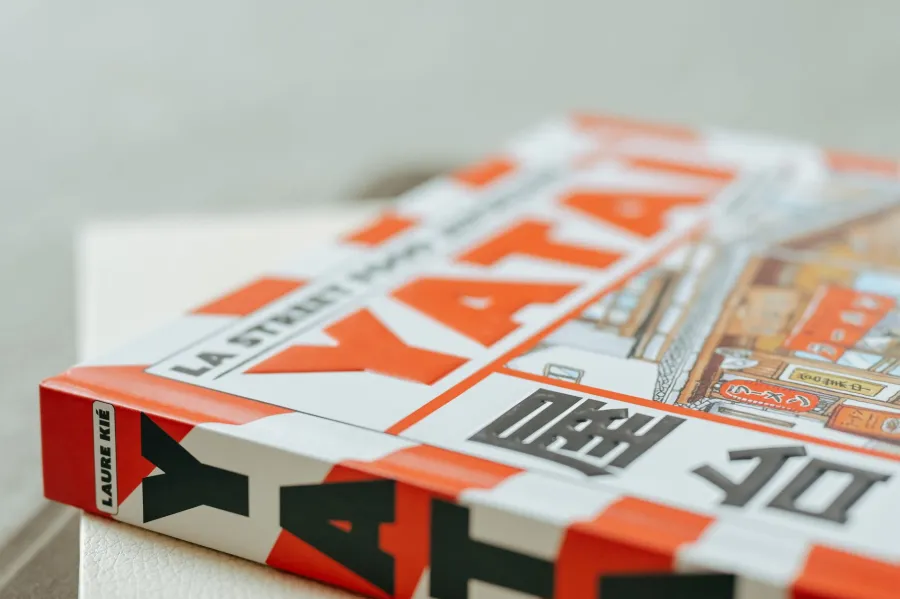
Embossing at a glance
- Raised motif, obtained with a male die and a counter-die.
- Simple relief or multi-level sculpted relief.
- Available blind or combined with hot foil stamping (foil embossing).
- Vector file strongly recommended for making the die.
- Best results on fine art papers, cloths and cases.
- Finish carried out in house, in our own workshops.
Which books is it for?
Art books and fine art editions, anniversary editions, corporate books, series covers, graphic novels and comics, literary titles, diaries, and more. For a recessed relief, see debossing.
Frequently asked questions
Is the imprint visible on the back of the cover?
Yes, that is the price of the relief: the shape appears recessed on the reverse.
On a case binding, the pasted endpapers hide it completely. If the embossed area is large, however, heavier endpapers should be used so that the imprint is not perceptible behind the pasted endpaper.
On a soft cover, it has to be taken into account from the layout stage. Depending on the project and the art direction, that can be an advantage as much as a drawback.
How much detail can be embossed?
Solid shapes come out very well; very fine lines and light typefaces are lost.
Supply a vector file and we will advise you before the die is engraved.
Is the die reusable?
It cannot be guaranteed: the die, usually in magnesium — a fairly soft material —, can be damaged when it is removed from the press.
If your embossing project covers several titles, or future reprints, do tell us: we can quote a brass die, more expensive but reusable indefinitely.
Can it be combined with hot foil stamping?
Yes: this is known as foil embossing, and the result can be superb.
We first apply a flat hot foil stamping with a metallic film, then emboss, bringing the foiled elements into relief.
Embossing, like debossing or hot foil stamping, calls for real expertise.
Ask our advice or send us a request for a quote online.