

PERFECT BINDING: A SOFT AND VERSATILE BINDING
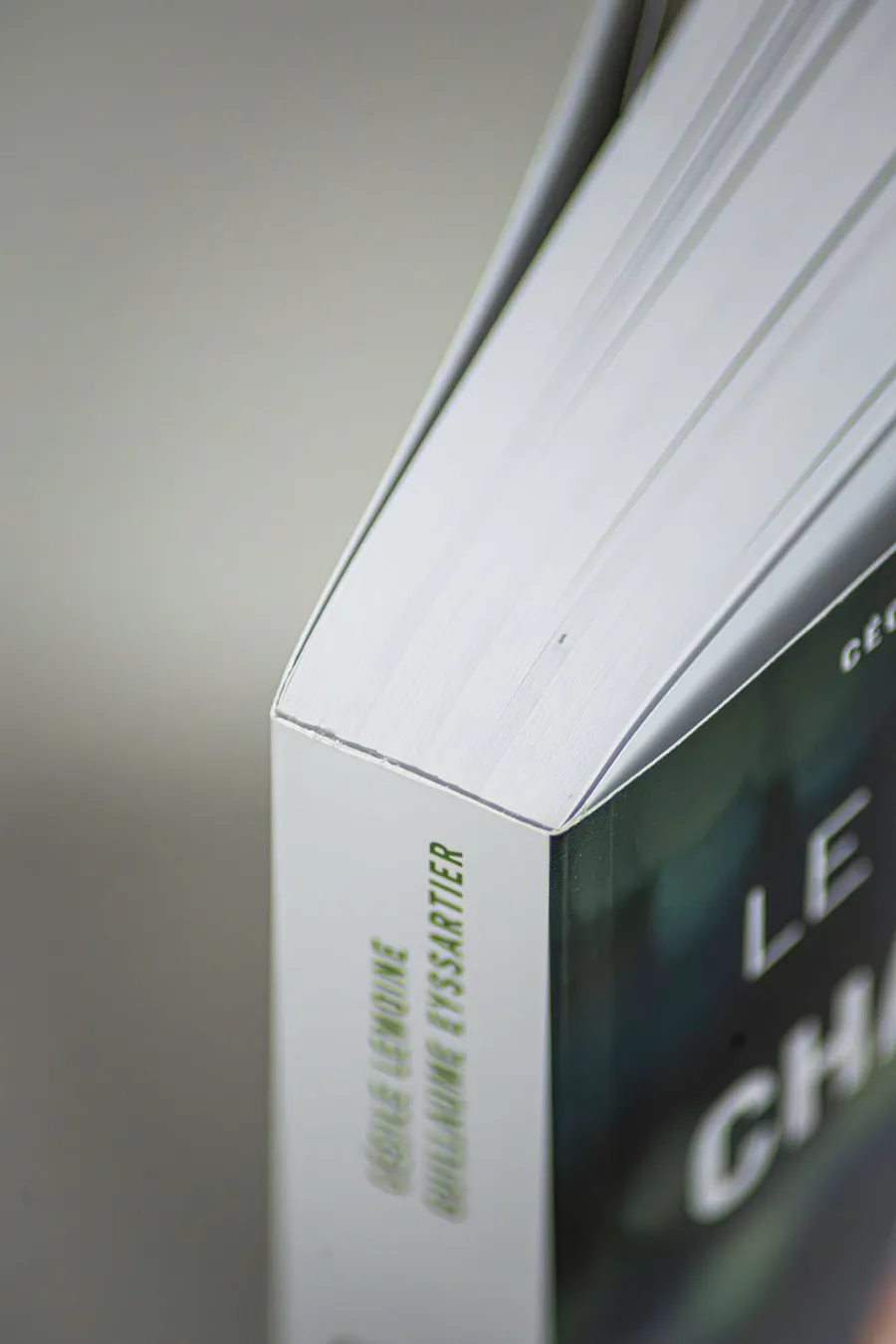
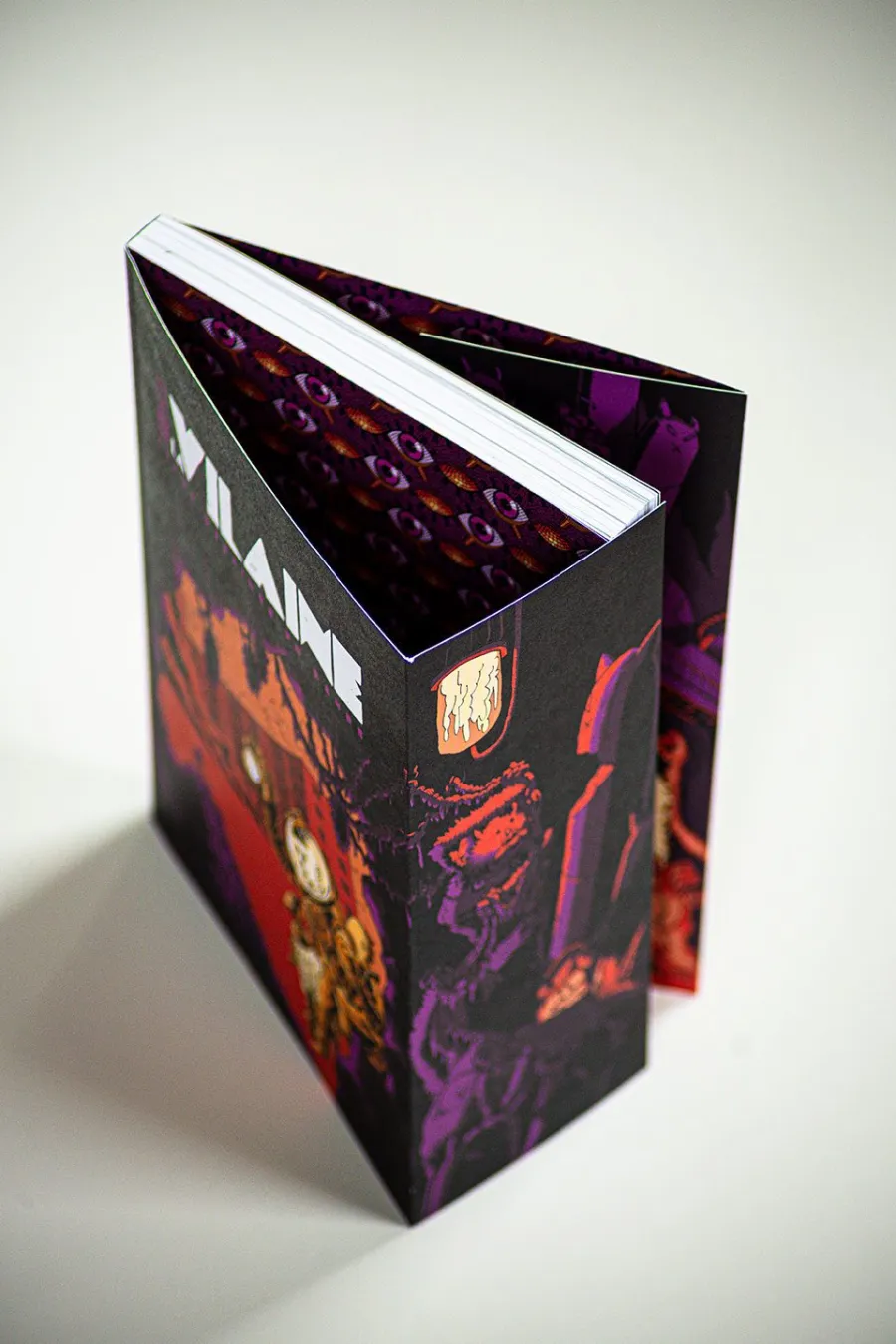
Perfect binding is the most widely used binding in publishing: the sections are milled, then glued into a soft cover. Sepec produces it on its own finishing lines, for novels, catalogues and practical books, from short to medium print runs.
How is a perfect-bound book produced?
The sections that make up the book are first gathered in order to form the book block.
The spine of the block is then milled to open up the paper fibres and take the adhesive.
The cover is creased and pressed onto the spine, wrapping the book block.
The book finally goes through the three-knife trimmer, which gives it its final format.
From printing — offset or digital — through to finishing and packing, every step follows on in our own workshops: one contact, one schedule and controlled lead times, from file to pallet.
PUR or hotmelt adhesive?
Hotmelt (EVA) adhesive hardens as it cools, within a few minutes: fast and economical, it suits books of moderate extent and documents that are not meant for intensive use or for the longest possible life.
PUR adhesive, which cures on contact with the moisture in the air, offers far superior and longer-lasting adhesion, a more flexible spine and therefore better opening, and much better resistance to both heat and cold. We recommend it as soon as the book contains coated paper, reaches a high extent or is intended for intensive use. PUR also gives the book a neater look, as it needs only a thin layer of adhesive, leaving a clean and precise joint.
Perfect binding at a glance
- Soft cover with or without flaps. Rounded corners available.
- Suitable from around forty pages upwards, with no theoretical maximum.
- PUR or hotmelt adhesive depending on paper, extent and intended use.
- Lamination, spot varnish, debossing or hot foil stamping on the cover. Sepec also masters edge staining and edge printing.
- Offset or digital printing by Sepec.
- PEFC certified papers, manufactured in France, in Péronnas or Forges-les-Eaux.
Technical specifications
| Minimum trimmed size | 105 × 148 mm |
|---|---|
| Maximum trimmed size | 210 × 297 mm |
| Minimum spine thickness | 4 mm |
| Maximum spine thickness | 60 mm |
| Minimum extent | 48 pages |
| Maximum extent | 800 pages |
| Minimum print run | 50 ex. en numérique, 500 ex. en offset |
| Indicative lead time | 3 à 4 semaines après BAT |
Indicative values, special formats aside: ask us, we look at every particular case.
Which books is it for?
Novels and general literature, essays, practical books, guides, corporate catalogues, school and revision books, journals and mooks: perfect binding is the standard for paperbacks. If you are looking for a soft cover that opens flat or lasts longer, also look at sewn and glued binding and Otabind binding.
Frequently asked questions
Should I choose PUR or hotmelt adhesive?
Hotmelt sets within a few minutes and remains the most economical option for a book of moderate extent and moderate use, printed on uncoated paper. PUR, which cures with the moisture in the air, gives a more flexible and neater spine, and offers far greater strength and a much longer life: we recommend it as soon as there is coated stock, a high extent or intensive use.
How many pages does perfect binding require?
The spine has to be thick enough for the adhesive to grip: it depends on the weight and the bulk of the paper, but as a rule around forty pages. Below that, saddle stitching may give a better result at a lower cost. Do get in touch to tell us about your project and ask for our advice.
Does a perfect-bound book open flat?
No: although PUR adhesive allows greater flexibility, with perfect binding the cover is glued across the whole width of the spine, and the book closes by itself. If the book has to stay open — cookbooks, language courses, sheet music — and you want a soft cover, look instead at Otabind or wire-o binding, which are designed for that.
Can the spine be printed?
Yes, title and logo sit easily on the spine as soon as it is wide enough. Its width depends on the extent and the bulk of the paper: we calculate it and send you the cover template before the final layout.
Planning a paperback? Get in touch or request a quote online.