


OTABIND BINDING: FLEXIBILITY AND WIDER OPENING
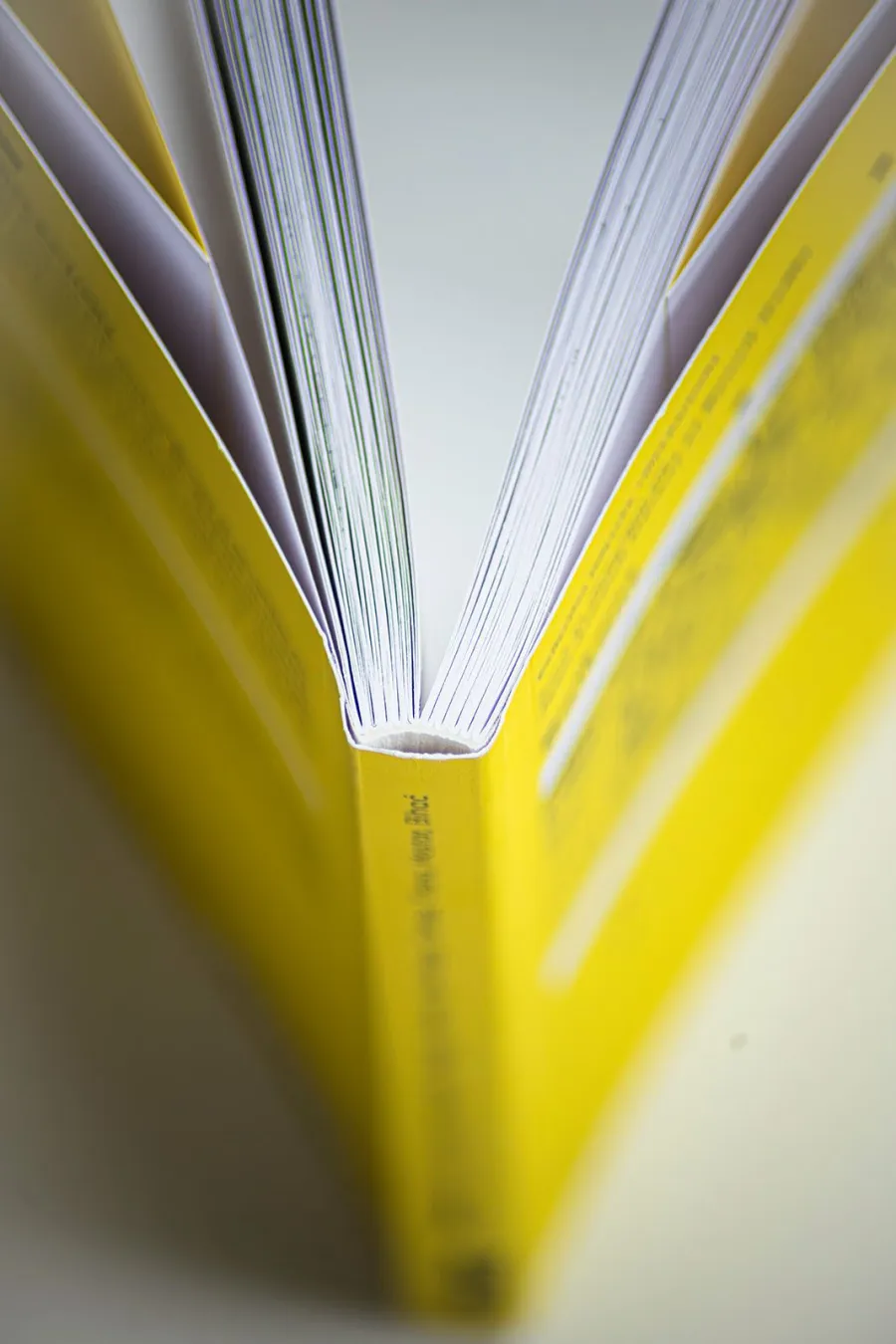
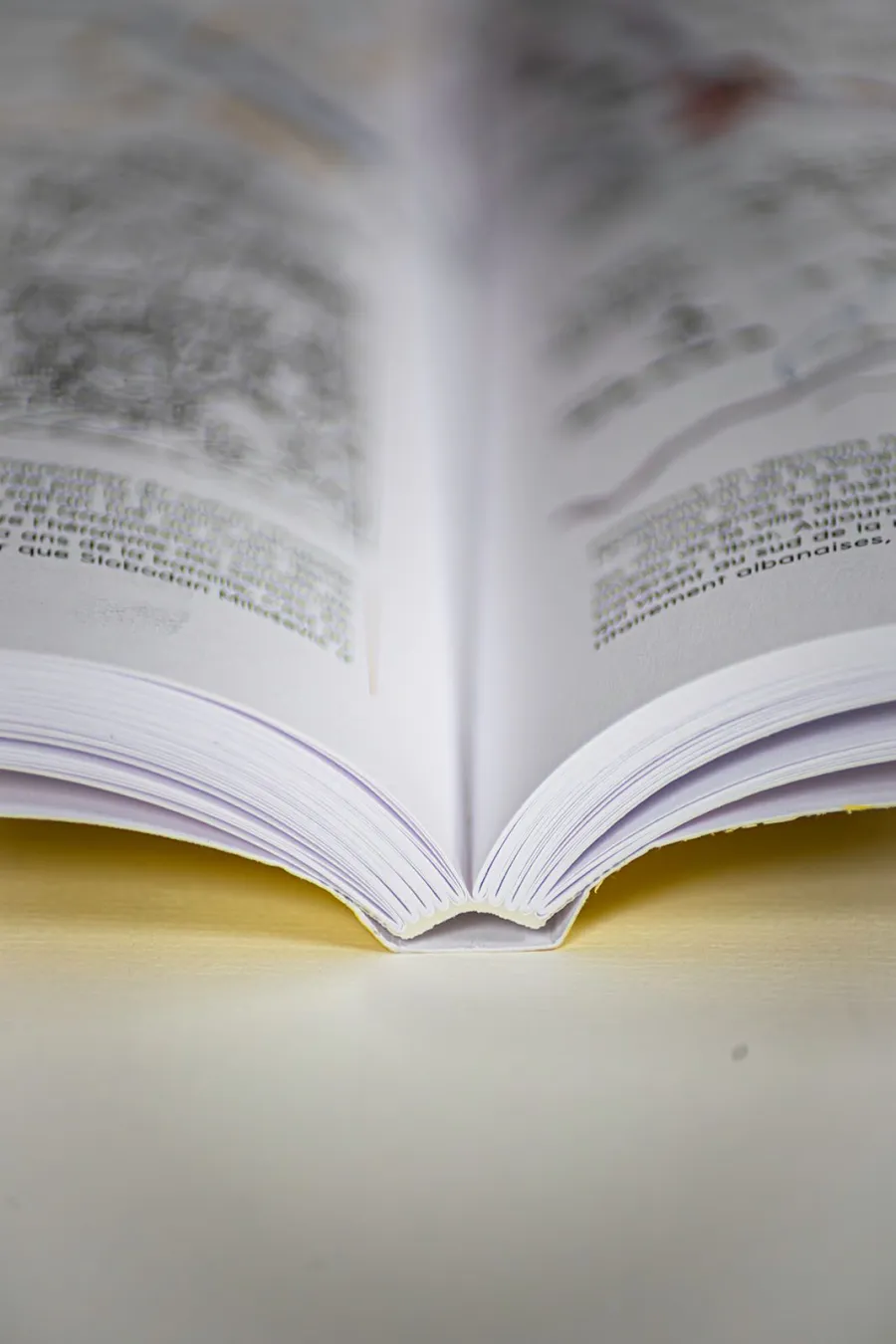
Otabind is a perfect binding whose book block is glued not to the cover, but to a reinforcing strip. The spine stays free: the book opens flat, without forcing, and the spine does not crack.
A free spine, a lay-flat opening
In a conventional binding such as perfect binding, the spine of the block is attached to the cover: every time the book is opened, adhesive and board are put under strain, and the spine eventually creases.
With Otabind, the glued block is fixed to a flexible strip (binding gauze) and the cover is creased on either side of the spine, then glued to the block. The cover opens out freely and the spine of the block stays free — a floating spine.
The result: the book opens to 180° and stays open on a table or a worktop, while keeping the look of a paperback. The spine does not suffer either, and anything close to the binding — text or illustration — remains perfectly visible.
When should you choose Otabind?
As soon as the book is used with your hands busy or laid flat: cookery books, language courses, learning manuals, sheet music, technical guides, exercise books and product catalogues.
Compared with a conventional perfect binding, the comfort in use can make all the difference for your project. Otabind may well be the best trade-off for a practical soft-cover title.
Otabind binding at a glance
- Lay-flat opening at 180°, without cracking the spine.
- Page content stays perfectly visible, even close to the binding.
- Soft, creased cover, with or without flaps. Rounded corners available.
- PUR adhesive for coated inside pages and high extents.
- Cost close to perfect binding, greater comfort in use.
- Available in offset and digital, from short runs upwards.
Which books is it for?
Cookery books, practical and craft titles, courses and manuals, technical books, professional catalogues: every title consulted while doing something else. For the same uses with a semi-rigid or rigid cover, see Integra binding or hardcover binding.
Frequently asked questions
What sets Otabind apart from perfect binding?
The block is not glued to the spine of the cover: it is attached at the two hinges, and the cover is creased so that it folds back freely. The spine of the block stays free. The book opens flat and stays open, while keeping the look of a conventional paperback. And unlike perfect binding, the spine does not crease as the book is used.
Otabind or wire-o for a book that must stay open?
Otabind keeps a printable spine and the appearance of a bookshop title. Wire-o opens through 360° and lies flat, but imposes its spiral look and removes the spine. The choice usually follows the destination: the bookshop for one, professional use for the other.
Can Otabind be combined with PUR adhesive?
Yes, and we recommend it: PUR stays flexible, which directly serves the flat opening, and holds on the coated papers used for cookbooks and course books.
Which books is Otabind for?
Cookbooks, language courses, technical manuals, sheet music, practical guides, catalogues consulted flat: anything read with your hands busy.
Does flat opening really matter for your book? Ask us for an Otabind quote, or simply ask our advice.