


INTEGRA BINDING: THE STRENGTH OF A HARDBACK, WITH FLEXIBILITY
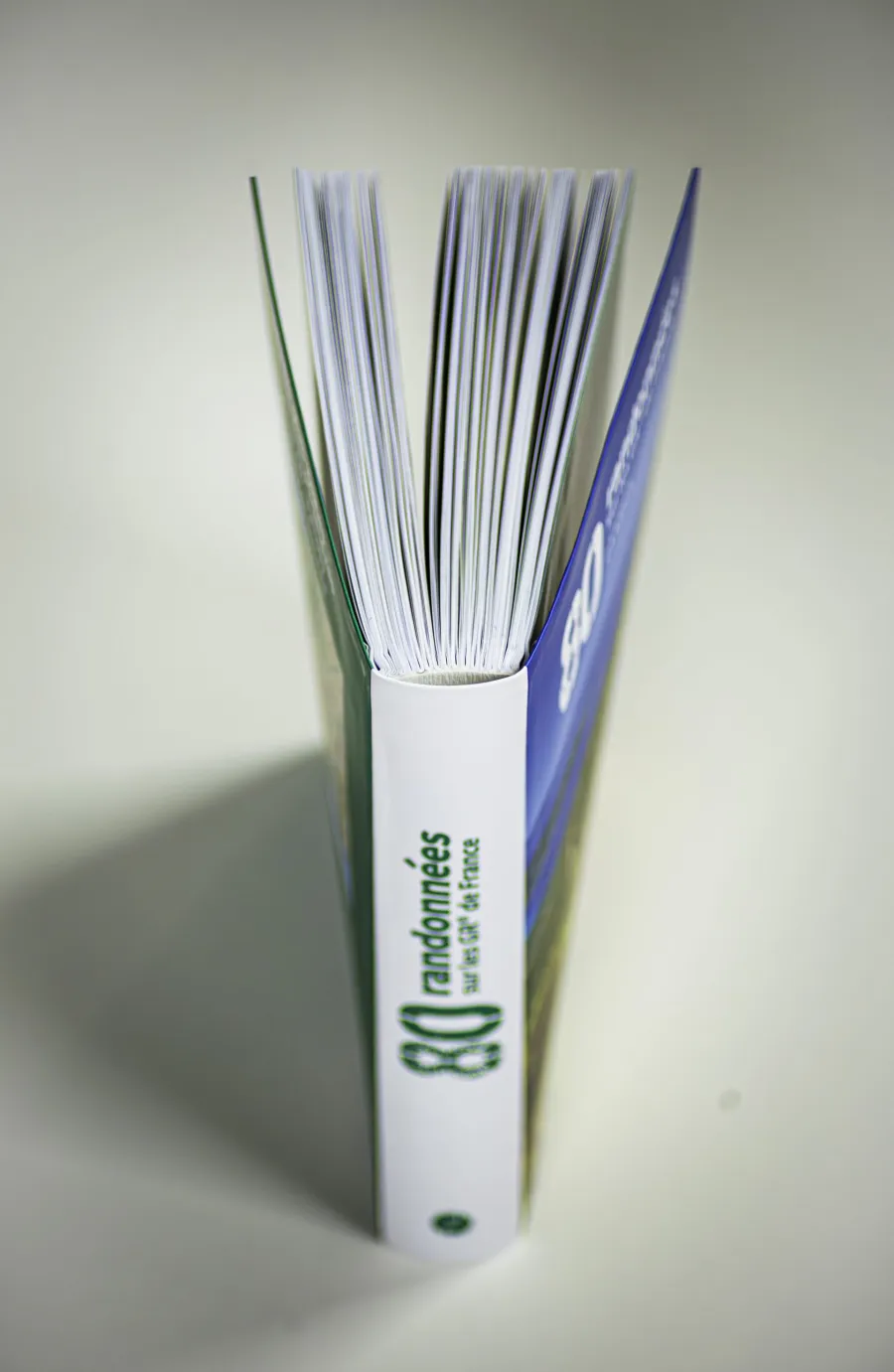
Integra is a semi-rigid cover: tougher than a paperback, lighter and more flexible than a hardback. A trade-off much appreciated for guides, manuals and everyday art books.
A semi-rigid cover, turned in and glued
The Integra cover is made of a semi-rigid printed board, laminated and then turned in: it gains a thickness and a firmness close to board, without the weight or the rigidity of a case binding. The block — sewn, glued and reinforced with binding gauze — is cased into it. Block and cover are joined by the endpapers, as on a hardback.
This binding can take a headband and ribbon markers.
The result can be recognised by touch: rounded, solid edges, a cover that does not dog-ear, and a book that stays easy to handle, even at a high extent.
Between paperback and hardback
Compared with a conventional paperback, Integra brings shelf presence, resistance to transport and a far longer life.
Compared with a hardback, it makes the book lighter — a real issue for a guide you carry or a textbook you take around — and reduces both production and shipping costs, while accepting the same finishes: soft touch lamination, spot varnish, hot foil stamping, debossing, and so on.
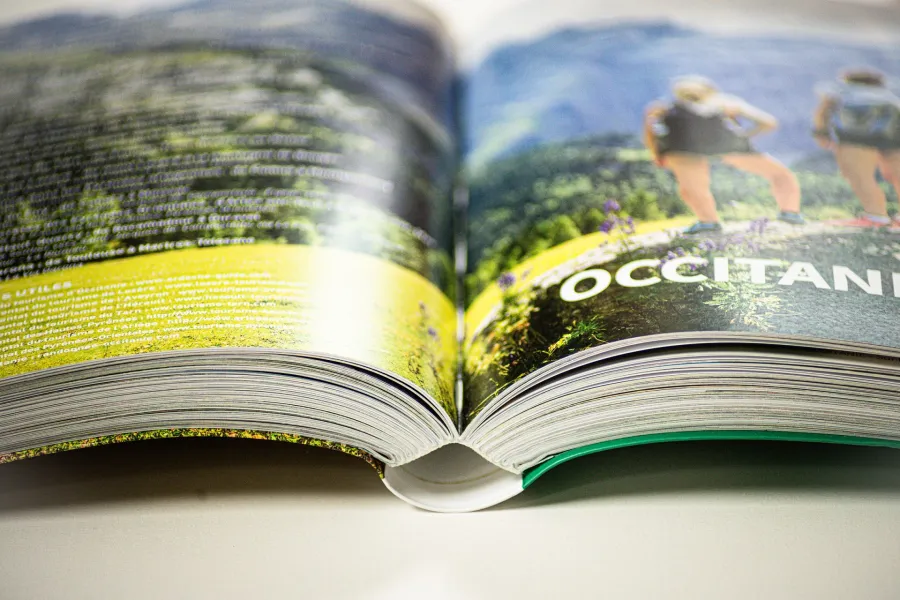
Integra binding at a glance
- Semi-rigid cover: the perfect balance between a paperback and a case binding.
- Stronger than a paperback, lighter and handier than a hardback.
- Sewn and glued block for high extents and intensive use.
- All cover finishes: lamination, varnish, foil stamping, embossing, and more.
- Ideal for books that are carried, handled and consulted often.
- Short and medium runs, finishing integrated at Sepec.
Which books is it for?
Travel and walking guides, legal and scientific guides, school and revision books, practical titles, technical works, notebooks and everyday art books.
For a more prestigious — but rigid — result, see hardcover binding; for a soft binding that opens perfectly flat, Otabind binding.
Frequently asked questions
What exactly is an Integra binding?
A soft but thick cover, with turned-in edges and pasted endpapers, as on a hardback.
The feel and the look come close to a case-bound book, while keeping it lighter, handier and more affordable.
Integra or case binding?
Integra lightens the book and cuts production and shipping costs, while keeping a cover that does not dog-ear and is built to last. It is ideally suited to books meant to be carried around and used intensively. Case binding remains the choice for prestige titles, high extents and books meant to last for decades.
Does it open flat?
Better than a conventional perfect binding, thanks to the endpapers, the sewing and the flexibility of the spine (a floating spine). For a perfectly flat opening, Otabind remains the benchmark.
Which books is it for?
Guides and practical books, art books on a controlled budget, school and revision titles, exhibition catalogues: wherever a case binding would be too heavy, too expensive or too… rigid.
Interested in Integra? We can quote your book in Integra, paperback and hardback so that you can compare.