


SEWN AND GLUED BINDING: FLEXIBILITY, STRENGTH AND READING COMFORT
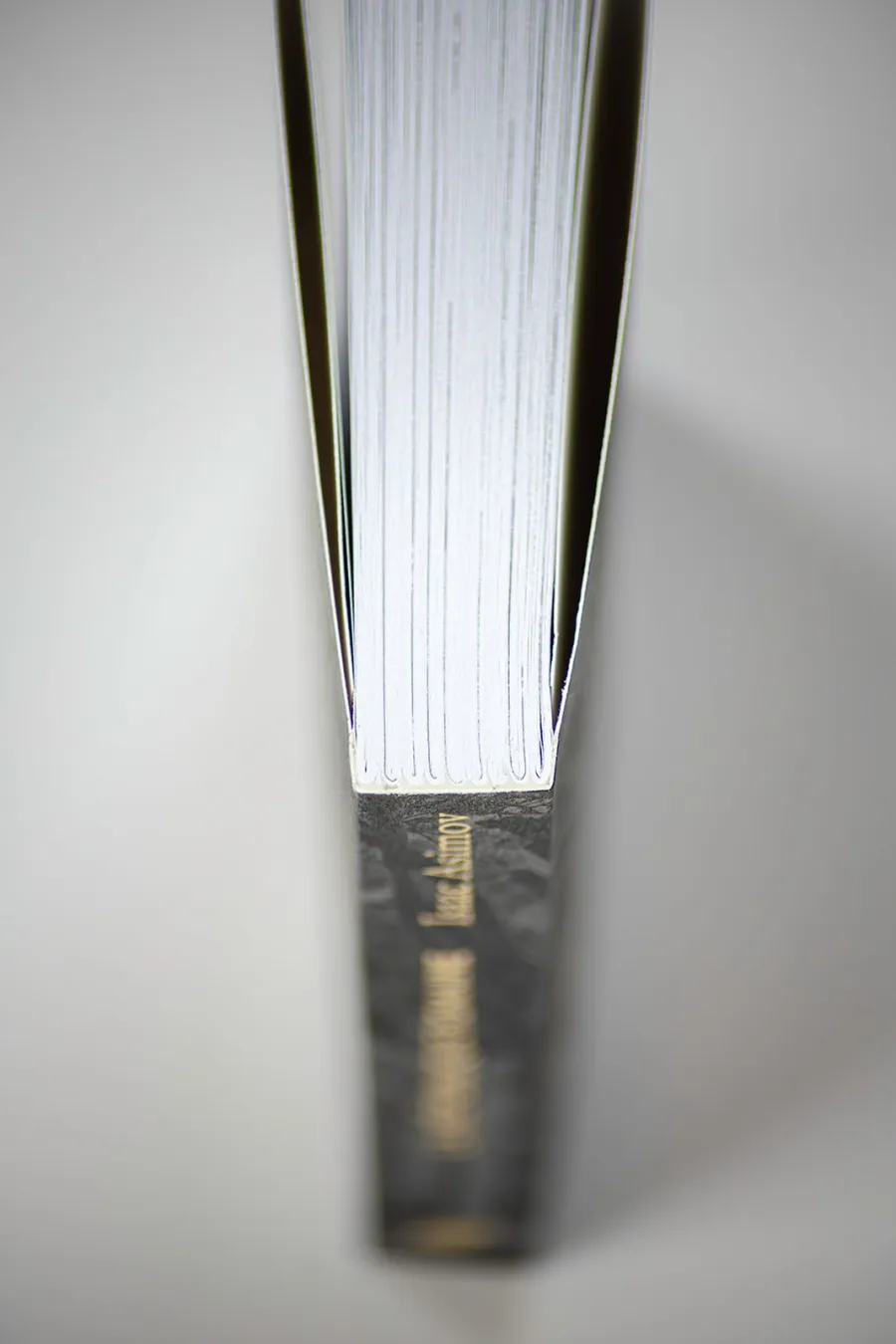
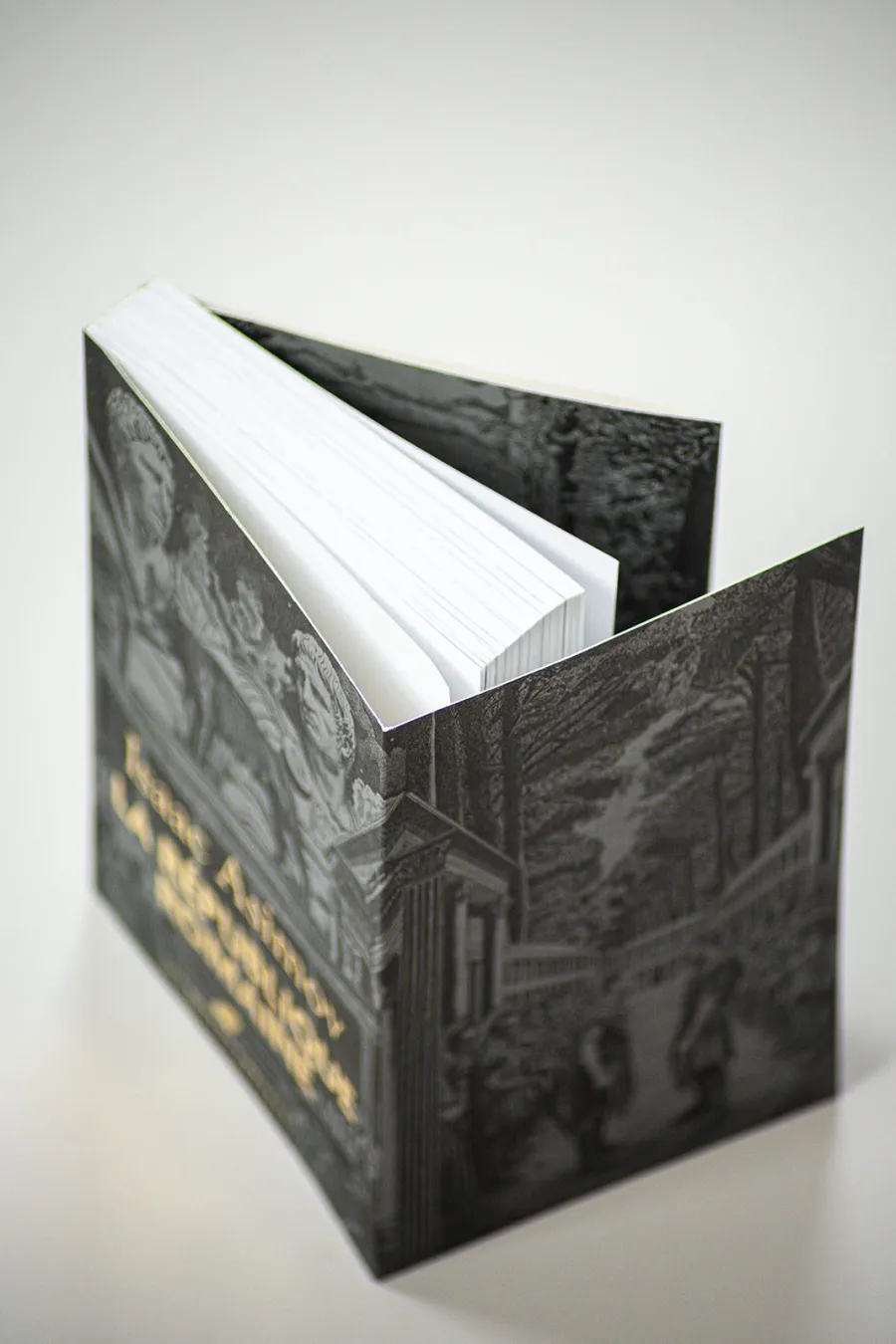
Sewn and glued binding adds to the paperback what it lacks: sewing. Each section is sewn with thread before the spine is glued, for a book that opens better and lasts far longer.
Thread sewing, then gluing
After folding, the sections go through the sewing machine: a thread runs through them and links them to one another along the spine. The sewn block is then glued and cased into its soft cover, exactly like a perfect-bound book — the sewing being added to the adhesive, not replacing it.
This is the gesture of traditional bookbinding, mechanised on our finishing lines. It adds a step to production, and therefore a cost, but it permanently changes how the book holds together.
What sewing changes for the reader
A sewn book opens wider and stays open more readily: it is more pleasant to handle and comfortable to read right into the gutter.
Above all, sewing guarantees longevity: pages do not come loose, even after years of handling, and the book copes with high extents as well as with coated papers, on which adhesive alone bonds less well.
Sewn and glued binding at a glance
- Sections sewn with thread then glued: the strongest soft binding.
- Noticeably more comfortable opening than plain perfect binding.
- Recommended beyond a high extent and on coated inside pages.
- Soft cover, with or without flaps, and every finish available (lamination, hot foil stamping, spot varnish, embossing, debossing, edge printing). Rounded corners available.
- Suited to books destined for libraries and repeated use.
- Produced in house, straight after offset or digital printing.
Which books is it for?
Soft-cover art books, fine art books, academic works and textbooks, children's books, walking guides, cookery books: every title meant to be opened often, for a long time, or flat.
For perfectly flat opening with a soft cover, you can also consider Otabind binding.
For a rigid cover, turn to hardcover binding.
And if you are after the best of both worlds — the convenience of a soft binding with the durability of a case binding — Integra binding should appeal to you.
Frequently asked questions
How does it differ from plain perfect binding?
The sections are sewn with thread first, then glued into the cover. The book does not shed pages, opens more freely and withstands years of handling: it is the strongest soft binding we produce.
Is it much more expensive?
Sewing adds a step, therefore cost and lead time. It pays off as soon as the book is handled intensively and/or over a long period (school books, reference works, art books, and so on) or goes beyond the comfortable extent of plain gluing.
Does the extent have to be a multiple of 16?
The book is made up of sections of 8, 16 or 32 pages. We adjust with a shorter section or a few blank pages at the end. Our prepress team validates the imposition before printing, so there are no surprises.
Can it be used with a hard cover?
Yes, and it is the very basis of case binding: a sewn block built into a case gives the most durable book we produce.
Hesitating between perfect binding and sewn and glued? Send us more about your project and we will quote both options.