


EDGE COLOURING: TURN YOUR BOOK INTO A UNIQUE OBJECT
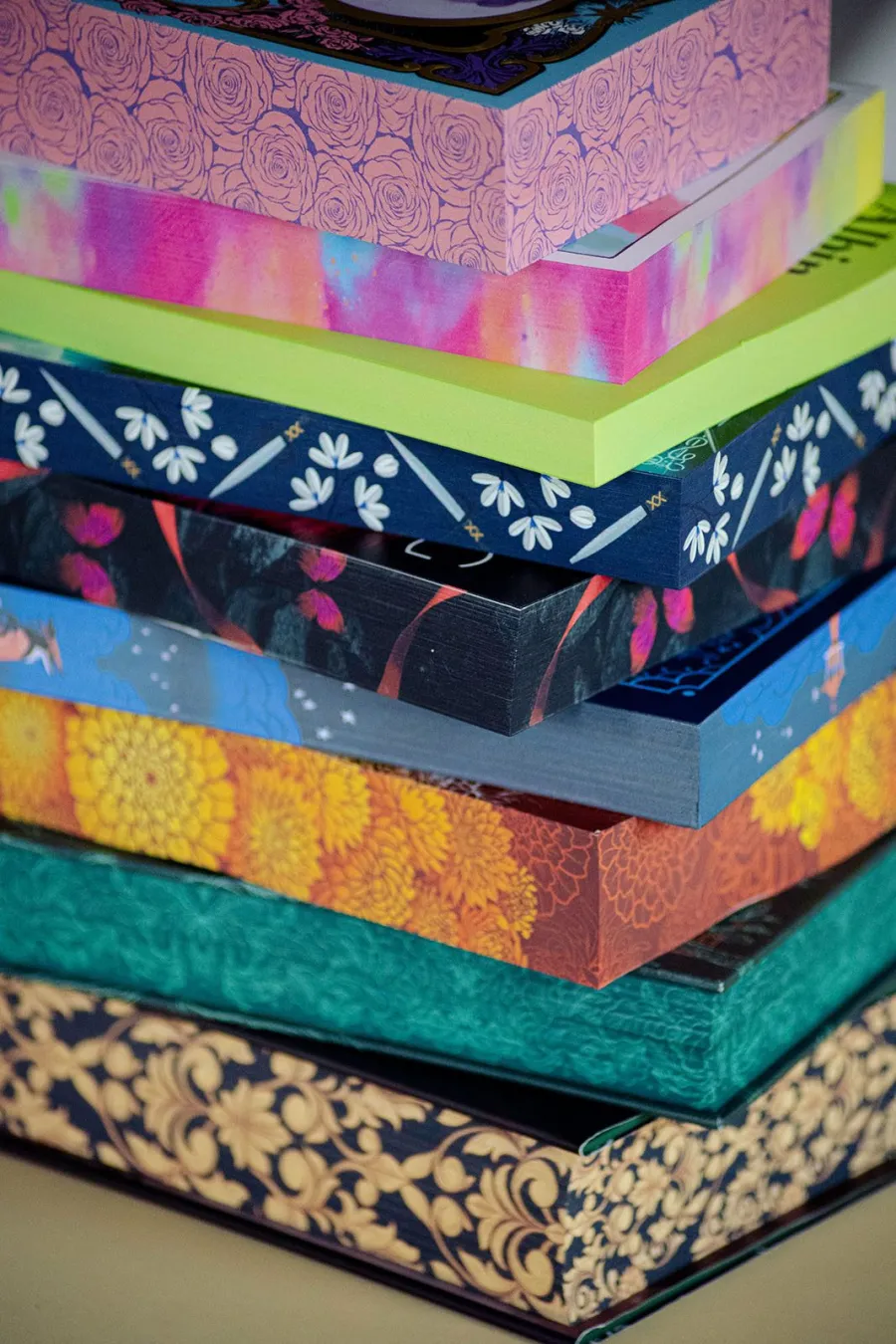
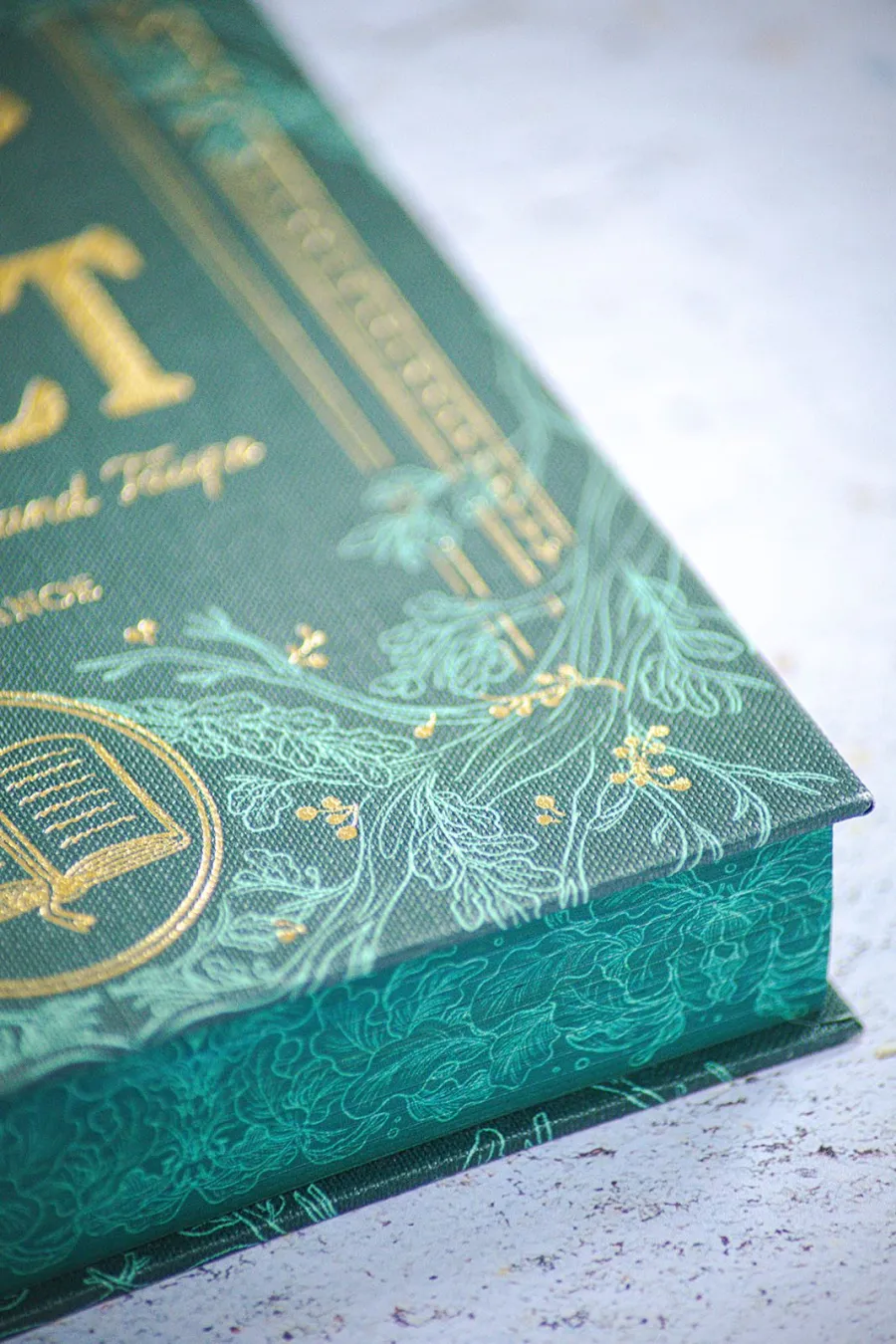
Edge decoration has become a generic term for decorating the edges of a book. Solid colour, gradient, printed pattern or text: the edges become part of the book's identity, visible before it is even opened.
From coloured edges to edge printing
Traditional edge staining applies a solid colour to the three edges of the book.
Today the word usually refers to edge printing: this four-colour inkjet technique goes further, and a pattern, an illustration or a title can be printed on the edges.
We produce these finishes in our own workshops, on paperbacks as well as hardbacks, in series as well as in limited editions.
A finish that sells
Decorated edges have become a strong marker of contemporary publishing: collector's editions, young adult novels, boxed sets, art books, anniversary editions and diaries use them to stand out on the shelf and on social media. The finish also makes the most of every face of the book, turning it into a genuine object.
The edges can then extend or complement the cover, carry a pattern or an illustration specific to a series, reinforce a strong graphic world or simply add a subtle touch.
Although edge decoration is very present in young adult fiction, it can prove just as relevant and attractive in less expected genres: general literature, children's books, graphic novels, practical and leisure titles, religion and spirituality, and so on.
Edge colouring at a glance
- Solid colour, gradient, illustration, pattern or text on the edges: a creative space to make the most of.
- On one edge (fore-edge) or on all three edges.
- Compatible with soft covers (without flaps) and hardcovers.
- At Sepec, an illustration is generally printed in a single pass per edge, a solid colour in two passes.
- Can of course be combined with another embellishment technique to create unique books.
- Suited to limited editions as well as regular print runs.
Which books is it for?
Edge decoration can be relevant and effective in every field. What really matters is that it fits a coherent intent — the DNA of the book, the readership aimed at — and that it is worked on as a full part of the book's graphic design.
Collector's editions, novels and literature, art books, graphic novels, religious works, premium diaries and notebooks, children's books, travel guides, and more. Edge decoration belongs to no genre in particular: it is precisely where it is still rare that it creates the strongest sense of distinction.
Frequently asked questions
What is the difference between edge staining and edge printing?
Edge staining colours the edges in a single, solid colour.
Edge printing goes further: we print an illustration, a pattern or text in four colours.
Which bindings allow it?
We can produce this finish on soft-cover books without flaps, and on hardcover books.
What limits should I be aware of?
Edge decoration cannot be applied to soft covers with flaps: these prevent the book from being pressed tightly enough, and the ink may then seep inside the flap.
It cannot be applied to books with rounded corners either, as printing at the corners would not be sharp (contact with the print heads is lost) — unless that constraint is built into the graphic design of the edges.
Finally, coated papers, being less porous and absorbent, call for particular care: a high ink coverage can cause slight bleeding between the leaves.
What file should be supplied?
A separate PDF file for each edge: head, fore-edge and tail.
Portrait orientation is required.
Recommended format: PDF/X-4:2010.
Minimum resolution: 300 dpi.
Allow 3 mm of bleed on every side.
The thickness of the edges depends on the extent and the paper, so we send you the template once the spine has been calculated.
Would you like to look at a made-in-France edge decoration for a future project?
Ask our advice or request a quote online.